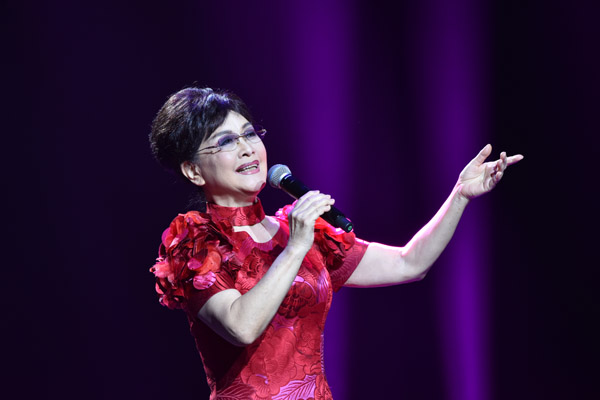
Li Guyi
Introduction
Li Guyi is a prominent Chinese singer known for her significant contributions to the Chinese music scene, particularly in the realm of pop music. Born in Kunming, Yunnan province, Li has been an influential figure in China’s music industry for several decades. Her career began in the 1960s and she gained nationwide fame in the 1980s with her unique singing style which blended traditional Chinese opera techniques with Western musical influences. Her involvement in China's cultural evolution, especially during the reform and opening-up period, has left a lasting impact on the country's musical landscape.
Early Life
Li Guyi was born in Kunming, Yunnan province. Her musical journey began at the tender age of 15 when she joined the Hunan Art Institute to study huaguxi opera, a traditional folk music and dance form from Hunan. This early exposure to performing arts laid the foundation for her future career in music and theatre. Between 1961 and 1974, Li worked as an actress with the Hunan Huaguxi Opera Theater, honing her skills in traditional Chinese opera. Her early life was marked by a strong dedication to mastering the art of performance, which later translated into her distinctive singing style that incorporated elements of traditional Chinese operas.
Musical Career
Initial Success
Li Guyi's transition from a regional opera performer to a national pop icon began when she joined the Central Symphony Orchestra, now the China National Symphony Orchestra, as a solo singer in 1974. This move marked her entry into the mainstream music scene. Her initial success can be attributed to her ability to blend Western vocal techniques with traditional Chinese music, a fusion that appealed to a wide audience. During this period, she toured extensively both within China and internationally, performing in countries such as France, the United States, and Japan. Her performances were characterized by a unique blend of musical styles, which set her apart from her contemporaries.
Breakthrough Performance
Li Guyi's breakthrough came in 1980 with her performance of the song Homeland Love, written by Ma Jinghua and Zhang Peiji. This song propelled her to stardom and made her a household name across China. The performance was notable for its departure from the traditional solid, wide vocal range that dominated Chinese music at the time. Instead, Li employed a sweet, airy vocal style that was more aligned with pop music aesthetics, which was a novel approach in China. Homeland Love eventually gained widespread popularity, particularly after Li performed it by popular demand at the 1983 China Central Television's Spring Festival Gala.
Later Works
Following her success with Homeland Love, Li Guyi continued to build on her musical career, producing several other notable works. One such song is Unforgettable Tonight, which became the traditional closing song for the Spring Festival Gala for over 30 years. Her repertoire expanded to include a variety of songs that feature a blend of Chinese folk elements and modern pop influences. Li has also been active in mentoring younger singers, encouraging them to explore the rich diversity of Chinese opera and ethnic music. Her later works often reflect a deep appreciation for traditional Chinese culture, combined with a progressive approach to music.
Contributions to Chinese Music
Li Guyi is widely regarded as a pioneer in the development of Chinese pop music. Her integration of Western singing techniques with traditional Chinese music has influenced a new generation of Chinese musicians. She has actively promoted original Chinese songs that incorporate elements from various Chinese folk operas and ethnic groups. Li's approach to teaching emphasizes the importance of understanding and performing traditional Chinese operas as a foundation for developing a distinct musical style. Her contributions have played a vital role in the diversification of China’s music scene since the reform and opening-up period began in 1978.








